Materials, longevity & care
Choosing a Bath Robe: A Guide to Fiber, Longevity, and Care
A robe can be a soft landing after a shower, a warm layer on a slow morning, or simply an easy piece to reach for at home. But comfort is only part of the story. Fiber, fabric construction, laundering and how often a robe gets worn all help determine whether it remains useful—and what its environmental footprint looks like over time.
Published October 27, 2026
The best robe is the one that fits your real routine
There is no single fabric that makes the perfect bath robe for everyone. A plush cotton robe may feel like a treat on a cold morning, but take longer to dry in a small bathroom. A light silk dressing gown can drape beautifully over sleepwear, yet it is not designed to soak up water the way terry cloth does. A waffle-weave robe may be easier to pack and quicker to air, while a synthetic blend could offer resilience but raise different questions about fiber shedding and end-of-life options.
That is why a robe’s label deserves more attention than its first impression. Touch the fabric, if you can, but also ask what the garment is meant to do. Will it go on directly after bathing? Is it mostly a warm layer over pajamas? Will it travel in a suitcase, hang in a humid bathroom, or be washed every few days? Matching construction to use is a practical first step toward a robe that feels right and lasts.
It is also a more thoughtful way to approach textile sustainability. A garment’s material matters, but so do how long it serves, how much care it requires, and whether it is used regularly rather than left in a closet. Buying for an actual need—and choosing a robe you can maintain—can be more meaningful than chasing a label that sounds automatically “green.”
Start with what you want the robe to do
“Bath robe” covers several different garments. Some are towel-like wraps meant to absorb moisture after a shower. Others are lightweight dressing gowns for lounging or getting ready. Many sit between those uses, adding warmth and coverage without being particularly absorbent. The distinction is easy to overlook when a product photo focuses on color, trim or a dramatic collar, but it can make a big difference once the robe is in regular rotation.
- For stepping out of the shower: Look for absorbency, a comfortable fit and a fabric that can dry fully between wears.
- For warmth and lounging: Consider fabric weight, softness and whether the robe feels comfortable over sleepwear.
- For travel or warm weather: A lighter, less bulky construction may be easier to pack and quicker to air out.
- For dressing or a refined layer: A smooth, fluid fabric may matter more than towel-like absorbency.
These are not strict categories. A robe may be worn in several ways, and personal preference matters. The useful question is whether its material and construction match the job you expect it to do most often. A robe that feels lovely but is constantly too warm, too delicate or too slow to dry may not be a lasting favorite.
How common robe fibers compare
Fiber names offer clues about a robe’s likely feel and care needs, but they do not tell the whole story. Yarn, weave, pile, fabric weight and finishing can make two garments with the same fiber behave quite differently. Treat these comparisons as a starting point, then check the garment’s care label and construction details.
Cotton: familiar, absorbent and varied
Cotton is a common choice for bath robes because it can absorb water and is available in many constructions. Terry cloth has loops that create a thick, towel-like surface; those loops can make it feel cozy and help it take up moisture. The trade-off is bulk: a heavy terry robe may need more room to wash and dry, and its dense fabric can stay damp longer in a humid space.
Waffle-weave cotton is typically flatter and lighter than plush terry. It may be easier to pack and can dry more readily, depending on its weight and the conditions where it hangs. It may not feel as cushioned or absorb as much as a thick looped robe. A smoother cotton weave can work well as a relaxed layer, although it may not provide the same towel-like performance.
Silk: fluid, lightweight and not towel-like
Silk is prized for its smooth hand and natural drape. A silk dressing gown can make sense as a light layer over sleepwear or while getting ready, especially for someone who values a fluid, refined feel. It is not generally the obvious choice for drying off after a shower: its purpose and surface are different from those of an absorbent cotton terry robe.
Care needs vary by garment. Some silk items can be washed gently at home, while others require professional cleaning. Always follow the specific label rather than assuming that all silk behaves alike. A silk robe that is worn thoughtfully and cared for as directed may remain in use for a long time, but its delicacy and care requirements should be part of the decision.
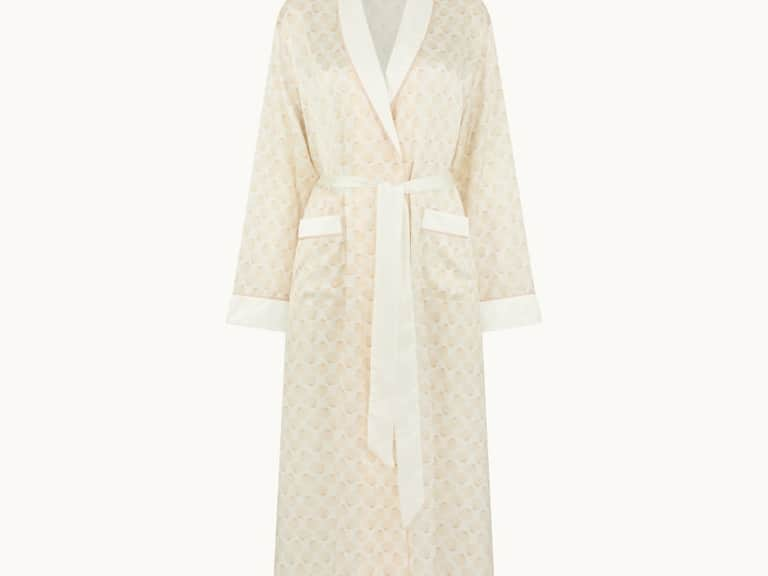
For an example of this lighter, dressing-gown approach, the Seashells Silk Dressing Gown is described as mulberry silk with an ivory trim and a hand-painted seashell motif. Its listed material and draping style make it a possible fit for lounging or dressing; the description does not position it as an absorbent, post-shower towel robe. That distinction is worth keeping in mind when choosing any silk garment.
Linen and linen blends: a textured, lighter alternative
Linen is made from flax and is often selected for its distinctive texture and relatively light feel. In a robe, the exact result depends on the weave, weight and finishing. It may appeal to people who prefer a less plush layer or live in a warmer climate, though it will not necessarily feel as soft or cushioned as a thick cotton terry garment. Blends can change the hand, drape and care requirements, so check the fiber percentages rather than relying on a broad “linen” label.
Polyester and other synthetics: useful performance, different trade-offs
Polyester and other synthetic fibers can be used alone or blended with natural fibers. They may help a garment resist wrinkling or hold its shape, but performance varies by fabric and construction. Synthetics are not automatically poor choices; a durable robe that gets worn for years can have practical value. At the same time, synthetic textiles can release microfibers during washing, and recycling a mixed-fiber garment may be difficult. Gentle laundering and using a garment for a long time are sensible considerations.
Blends: read the percentages, not just the headline
A blend can combine qualities from different fibers, but the balance matters. A robe labeled cotton-polyester may feel and perform differently depending on the proportion of each fiber, the weave and the weight. The fiber composition is also relevant at the end of the garment’s life: mixed materials can be harder to sort or recycle than a single-fiber textile. Look for a clear content label and consider whether the compromise suits your priorities.
Construction details that influence comfort and lifespan
Two robes made from the same fiber can have very different staying power. Construction details are not always glamorous, but they are often easier to assess than broad promises about luxury or sustainability. Look at the areas that take stress during ordinary use: the belt loops, pockets, cuffs, collar, shoulder seams and side seams.
- Seams: Straight, secure stitching helps the garment hold together through movement and laundering. Check for loose threads, uneven joins or areas that appear strained.
- Edges and hems: Neatly finished edges are less likely to unravel quickly. A heavier fabric also needs a finish appropriate to its weight.
- Belt loops and ties: These parts are pulled and handled frequently, so attachment and reinforcement can matter more than decorative detail.
- Pockets: Pockets add convenience but can sag if they are large, heavy or poorly secured. Consider whether they suit how you will use the robe.
- Fabric density and weight: Heavier does not always mean better. Weight may add warmth and absorbency, but it can also increase drying time and laundry load.
- Fit and movement: A robe should allow comfortable reaching, sitting and walking. Excess tension at seams can shorten the garment’s useful life.
Look for care information before you buy, too. A robe that requires a cleaning method you cannot realistically manage may be worn less often or cleaned in ways that shorten its life. Consider the full routine: washing frequency, drying space, access to professional care and whether the garment can be maintained without special effort every time.
Durability is a sustainability question
Textile impact is not captured by fiber type alone. Growing or producing a fiber, processing it, dyeing fabric, transporting a garment and eventually disposing of it all involve different considerations. The impact of any particular robe depends on how it was made and what happens during its life. Without transparent, comparable information, sweeping claims—such as “natural means sustainable” or “recycled means impact-free”—can be misleading.
Longevity offers a practical lens. A robe worn often and kept in good condition spreads its material and manufacturing impact across more uses. A garment that is technically durable but uncomfortable, impractical to wash or unsuited to its wearer may not achieve that. Comfort is not frivolous here: if you genuinely enjoy using the robe, you are more likely to keep it in rotation.
Consider the life of the garment before purchase. Is it made for the way you plan to wear it? Are the care directions manageable? Does the maker provide clear fiber content and construction details? Can a small issue, such as a loose button or seam, be repaired? These questions do not deliver a perfect environmental score, but they help replace guesswork with informed judgment.
It is also worth distinguishing between a robe’s features and its proof. Terms like “eco-friendly,” “conscious” or “responsibly made” are not, by themselves, detailed explanations. Look for specific, verifiable information about fiber origin, processing, certifications or manufacturing practices, and understand what a stated certification actually covers. A single label rarely answers every question about labor, chemistry, durability and environmental impact.
Care habits that can help a robe last
Care is part of a garment’s material story. A robe may be well made, but repeated high heat, harsh detergents or unnecessary washing can place avoidable strain on its fibers and seams. The safest guide is the care label attached to the specific garment; general fiber advice should never override those instructions.
- Read the label first. Check the recommended water temperature, cycle, detergent guidance and drying method. Follow any special instructions for trims or contrasting fabrics.
- Wash when needed, not automatically. Follow hygiene needs and the garment’s care guidance, while avoiding unnecessary cycles that add wear, water and energy use.
- Use an appropriate detergent. Excessive detergent can be hard to rinse away, and harsh products may damage some fibers or finishes. Measure according to the product and machine instructions.
- Avoid crowding the washer. A bulky robe needs room to move and rinse. Overloading can leave fabric less clean and place extra strain on seams.
- Choose a suitable drying method. High heat can shrink, weaken or alter some textiles. Air drying may be preferable for delicate fabrics, but allow enough airflow for the robe to dry fully.
- Store it dry. A damp robe left bunched up can develop unpleasant odors and may be more vulnerable to mildew. Hang it where air can circulate rather than leaving it on a closed hook in a humid corner.
For a silk dressing gown, gentle handling is especially important. Check whether the garment can be washed at home and, if so, follow the stated method closely. Avoid wringing or rough handling unless the care directions expressly allow it, and keep the garment away from surfaces that could snag the fabric. For cotton terry, ensure the robe dries completely before storing; thick loops can hold moisture longer than a lightweight weave.
Small repairs can also extend useful life. A loose belt loop or a seam beginning to open may be fixable before the damage spreads. If the robe is no longer right for bathing but remains in good condition, it might continue as a home layer or be passed along where appropriate. At the end of its life, reuse or textile collection may be options depending on local services and the garment’s condition.
A simple checklist before choosing
When comparing bath robes, pause over a few practical questions. The answers can clarify whether a fabric is truly suited to your routine, rather than simply appealing in a product description.
- Will I wear this directly after bathing, or mainly over dry clothes?
- Do I prefer absorbency, warmth, lightness, a smooth drape or easy packing?
- What are the fiber percentages, and are they clearly stated?
- Are seams, hems, belt loops and pockets finished securely?
- Can I follow the care directions with the laundry facilities and time I have?
- Will the robe dry properly in my home?
- Is the garment likely to be comfortable enough for frequent use?
- Are any sustainability or sourcing claims specific and supported with useful details?
A thoughtful choice, not a perfect one
The most satisfying robe is not necessarily the plushest, the most expensive or the one made from a fiber with the best reputation. It is the one whose feel, absorbency, construction and care requirements make sense for the person wearing it. For a towel-like finish after a shower, a well-constructed cotton robe may be a natural place to begin. For a lightweight layer over sleepwear, a silk dressing gown can offer a very different kind of comfort—but should not be mistaken for a bath towel.
Looking beyond the fiber name makes the decision more balanced. A robe’s seams and fabric weight affect how it wears; its care label influences the effort and resources involved in keeping it clean; and the likelihood that it will be worn regularly matters to its useful life. Clear information, realistic expectations and simple care can turn a seemingly small purchase into a more considered textile choice.
Softness may be what first catches your attention. The robe you reach for again and again, however, is usually the one that fits your routine—and continues to do so after many mornings, showers and washes.